
What Is a Kunkupatri? The Rajput Wedding Invitation Explained
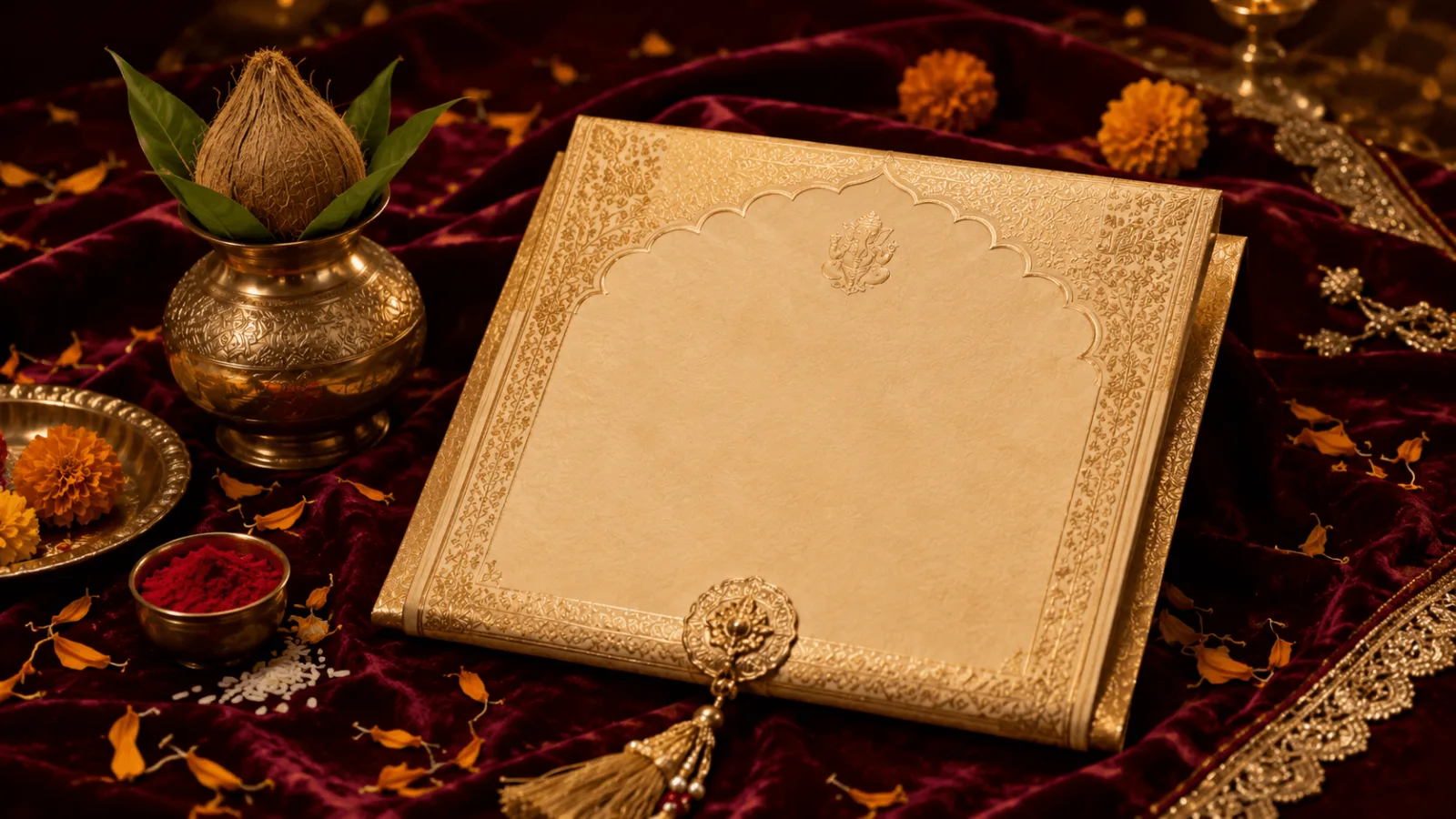
If you have grown up in a Rajput household, chances are you have seen one before you even knew its name — a folded sheet of paper, dusted faintly with red kumkum, passed carefully from one elder's hands to another, often accompanied by a coconut, a few grains of rice, and a hush of respect. This is the kunkupatri, and it is far more than an invitation card. It is a small, sacred document that has, according to tradition, carried the weight of family honour, alliance, and blessing across generations of Rajput weddings.
When we chose the name Kunkupatri for our matrimonial platform, we did not pick it lightly. We wanted a name that would remind every family who visits us of what a Rajput marriage has always been about — not a transaction, but a sacred bond between two houses, sealed with respect. Let's understand what this beautiful custom actually means, and why it felt like the only name that made sense for us.
Kunkupatri Meaning: Breaking Down the Word
The word kunkupatri (also written as kumkum patrika in many parts of Rajasthan and neighbouring regions) comes from two simple roots: kumkum, the vermillion powder considered auspicious in most Hindu ceremonies, and patri or patrika, meaning a letter, note, or document. Put together, it literally translates to "the letter marked with kumkum."
In many Rajput families, this is not merely a decorative flourish. The kumkum applied to the invitation is believed, according to tradition, to invoke blessings and mark the document as sacred before it is sent out. Unlike an ordinary printed wedding card that might be mailed or emailed to a long list of guests, the kunkupatri is traditionally reserved for a more intimate circle — close relatives, the family priest, respected elders of the clan, and sometimes the deity of the family's kul devta or kul devi, whose blessing is sought before any other announcement is made.
In several communities, a related term used is lagan patrika, referring specifically to the invitation that also carries the auspicious date and time (the lagan or muhurat) finalised by the family astrologer for the wedding rites. While regional practices differ, the lagan patrika and kunkupatri are often understood to be closely linked, or even used interchangeably in some Rajput households, with the emphasis always on the sanctity of the written word rather than its function as mere information.
The Rituals Around the Kunkupatri
What makes the kunkupatri so distinct from a modern invitation card is the ceremony that often surrounds its preparation and delivery. While practices vary widely from one Rajput family, region, and clan to another, a few elements are commonly described across generations:
- Preparation with reverence: According to tradition, the patri is first placed before the family deity or in the home temple, where it may be offered along with a diya, incense, and sometimes sweets, before it is marked with kumkum and a few grains of rice or akshat.
- The first patri to the divine and the elders: In many Rajput families, the very first invitation is symbolically "sent" to the kul devta or kul devi, and the next copies are personally delivered to the eldest members of the family — grandparents, uncles, and family priests — often by a younger family member as a mark of respect, before the wider circle is informed.
- Delivered, not posted: Traditionally, the kunkupatri was not something dropped in a mailbox. It was carried by hand, often by a family member or a trusted messenger, to homes of relatives — an act that itself reaffirmed the relationship between the two families.
- A keepsake, not just paper: In some households, the kunkupatri is preserved long after the wedding, tucked into a family trunk or an old diary, treated as a small memento of a significant occasion in the family's history.
Of course, no two Rajput families will describe these rituals in exactly the same way — customs shift from Mewar to Marwar, from Shekhawati to the diaspora communities that have carried these traditions abroad. What remains consistent, though, is the underlying sentiment: a wedding invitation in Rajput culture is not just information, it is an act of blessing and inclusion.
Why an Invitation Rather Than Just a "Card"
It is worth pausing on why Rajput families have historically treated the wedding invitation with such ceremony in the first place. A marriage, in this worldview, was never seen as a private matter between two individuals alone — it was, and in many families still is, understood as a union between two lineages, two histories, and two sets of responsibilities. The kunkupatri, marked with kumkum and delivered with care, was a small but meaningful way of saying: this alliance matters enough that we announce it with reverence.
This is precisely the spirit we wanted to bring into how Rajput families search for marriage alliances today.
Why We Named Our Platform Kunkupatri
Much of modern matchmaking, especially online, treats matrimony as a checklist — age, height, income, city. We wanted something different. We wanted a platform that would feel less like a marketplace and more like an extension of what a Rajput family already understands instinctively: that marriage is sacred, that it deserves the involvement of elders, and that every alliance carries the dignity of the family's name.
When a family sits down together to explore a profile, discuss a prospective alliance, and eventually — we hope — set a date and send out invitations of their own, we want the process from the very first search to feel rooted in that same respect the kunkupatri represents. That is why, when parents and young Rajputs alike come to us, we ask them to create a free profile on Kunkupatri not as a transaction, but as the first small, respectful step toward a lasting alliance — much like that first patri placed before the family deity, before it ever reaches a single guest.
Carrying the Tradition Forward
Customs change with time. Fewer families today may hand-deliver invitations across villages, and many now supplement the paper kunkupatri with digital messages to relatives scattered across cities and continents. But the values behind the custom — respect for elders, blessings sought before celebrations begin, and marriage understood as a union of families rather than individuals — remain deeply relevant to Rajput households everywhere, from Jodhpur to Jaipur to the diaspora in the UK, US, and Gulf.
We hope that every family who visits Kunkupatri carries a little of that same spirit with them: patience, respect for tradition, and hope for an alliance worth celebrating for generations to come.